
ANALYTICAL SCIENCES
Author:
Alex Duchars
Background
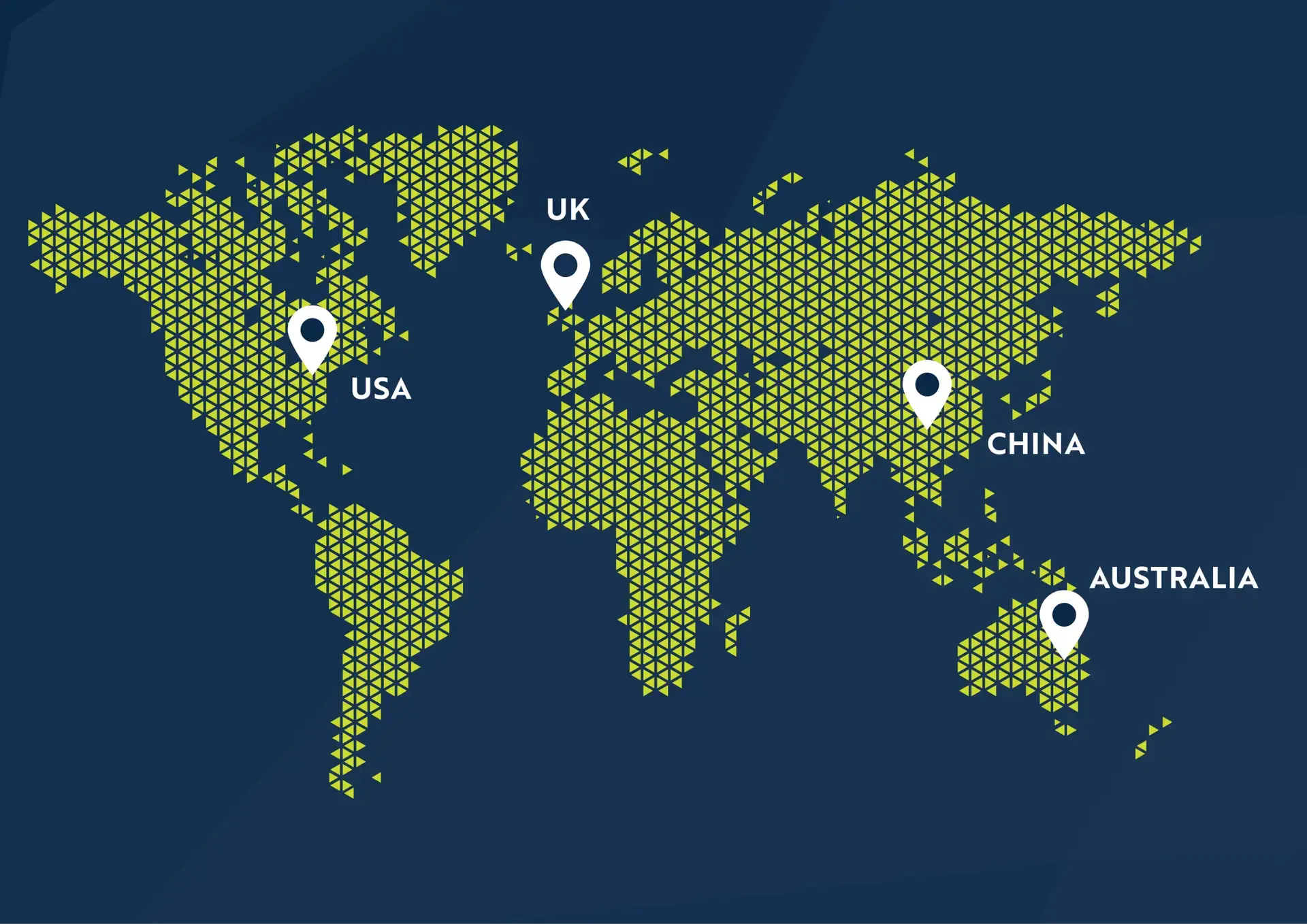
A multinational pharmaceutical sponsor manufactures across the globe. Nitrosamine testing has been a major focus in GMP-regulated manufacturing for many years, and in certain countries a portion of medicine quality control testing must be conducted locally to meet regulatory requirements. That means validated methods may need to be transferred internationally to support global access to pharmaceutical products. Moving a method that pairs complex sample preparation with state-of-the-art equipment at ppb levels takes excellent communication and knowledge sharing.
The challenge
The transfer carried four specific risks:
- Very low testing limits were required, at ppb levels with respect to the API.
- The selective solid phase extraction (SPE) sample clean-up protocol needed specific equipment at each receiving lab.
- Sensitivity was limited by the significant impact of the diluent on peak shape and retention.
- Language barriers were present with all of the receiving labs.
Our approach
Resolian’s Analytical Sciences team treated the transfer as a communication challenge as much as a chemistry one and built the approach in four parts. First, the team developed a robust SPE method that selectively removes the API and impurity, significantly lowering the risk of nitrosamine formation in solution at all sites.
Second, the team produced a comprehensive method feasibility report, giving context and theory for the testing method and detailing the key challenges met in development and the strategies used to address them.
Third, training was delivered virtually. Resolian recorded videos of the extraction process, explained the method and its limitations, and offered practical tips, while live sessions gave the receiving labs a chance to ask questions and discuss approaches face to face.
Fourth, Resolian worked closely with the sponsor and the receiving labs to align practices, including how to use the processing software to generate accurate, reliable and consistent result sets. Finally, detailed feedback on results and documentation during the transfer stages helped keep the method robust, with its key limitations re-emphasized before each transfer was executed.
Transferring a Trace-Level Method to Labs Around the World?
Resolian’s Analytical Sciences team builds robust ppb-level methods and backs them with feasibility reports, recorded training, and live support, so receiving labs can reproduce results with confidence.
Results
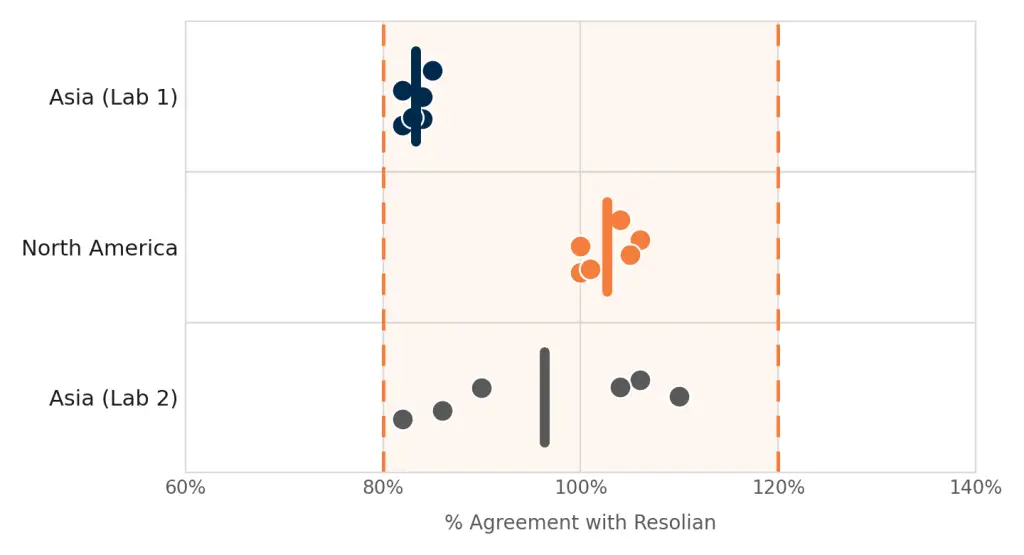
The method developed at Fordham was successfully transferred to all receiving labs, and is now used routinely in the UK, Asia and North America to detect ppb levels of the targeted nitrosamine. The cross-site precision acceptance criterion was 20% or better (n=12 results, n=6 at each lab):
- First receiving lab, Asia: pass.
- Second receiving lab, North America : pass.
- Third receiving lab, Asia: pass.
The source reports pass or fail against the acceptance criterion rather than the measured precision values.
What this means
Global access to medicines can depend on a ppb-level method working in a laboratory that did not build it. This transfer shows that a robust method, clear documentation, hands-on training and open review of data together make that possible, even across language barriers. For sponsors facing locally mandated quality control testing, it offers a proven pattern for moving trace-level nitrosamine methods to new sites with confidence.
Ready to Take Your Nitrosamine Method Global?
Resolian partners with pharma and biotech companies to develop, validate, and transfer ultra-trace nitrosamine methods, from method development through multi-site implementation.