Incorporating advanced instrumentation, Resolian specializes in the structural elucidation of active components and process impurities during all phases of development lifecycle for both small and large molecules.
These innovative approaches provide online separation and detection of compounds, expanding capabilities to tackle your impurity identification challenges comprehensively.
Reach out to us directly to learn more about Impurity Identification & Characterization services.
Impurity Identification Regardless of Matrix: Offering you expertise to identify and characterize impurities in diverse matrices, from macroscopic particles to the smallest chemical components.
Visible/Subvisible Particles: Resolian’s Foreign Matter Analysis team excels in handling visible and subvisible particles, ensuring thorough analysis.
Non-Volatile Components: Resolian employs cutting-edge technologies for both small molecules and large biomolecules in highly complex formulations, including UPLC-IM-HRAMS and 2D-UPLC-HRAMS, enabling confident characterization.
Semi-Volatile Components: Resolian utilizes CI and EI GC-MS complementing the identification of semi-volatile components, ensuring a comprehensive impurity profile.
VOCs and VVOCs Identification: Resolian’s HS-GC-MS, equipped with cryogenic capabilities, facilitates the identification of very volatile organic compounds (VVOCs).
Characterisation and monitoring of impurities using Ultra-Performance Liquid Chromatography and High Resolution Mass Spectrometry (UPLC-HRMS).
Knowledge of the impurities and degradation profile of drug substance and excipients is critical in understanding the stability, safety and efficacy of pharmaceuticals and biopharmaceuticals.
To identify, with a significant degree of certainty, low level impurities in the presence of high level components requires the combination of multiple analytical techniques and expert interpretative skills.
Our approach uses advanced chromatography and mass spectrometry platforms combined with innovative powerful software packages.
Together, the team of highly skilled scientists interrogates and interprets the data generated to elucidate the structure of individual or multiple unidentified components.
CASE EXAMPLE:
CHALLENGES
One example of quantifying impurities at very low levels involved an unknown degradation product of a human peptide hormone.
The sponsor had observed a new peak in the standard LC-UV chromatography during the stability assessment of the product.
SCIENCE
Our scientists established the sponsor’s method on to an Acquity UPLC coupled to a Waters SynaptTM G2 mass spectrometer. The method was modified for maximum sensitivity and the data interpretation focussed on specific regions within the chromatographic run.
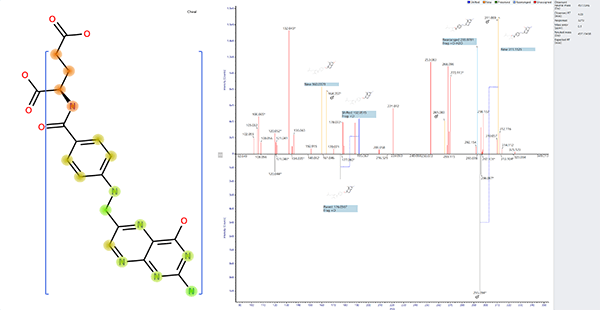
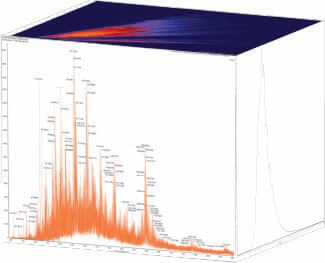
The data independent acquisition (DIA) enabled the simultaneous identification of components using the high resolution, accurate mass MS/MS fragmentation information (Figures 2 and 3).
OUTCOME
The data identified peptide sequences related to the human peptide hormone.
These peptide sequences identified a degradation pathway for this compound and highlighted a potential stability issue that previously had not been considered.
A VALUE ADDED SERVICE
Following the identification of an unknown species in your product, we can develop and validate appropriate assay and related impurity methods to support release testing and stability studies.
Our structural elucidation capabilities are also used to strengthen our Extractables and Leachables services in identifying unknown compounds from extraction studies.
Zhiyang Zhao, Ph.D., serves as Chief Scientific Officer (CSO) at Resolian. Dr. Zhao has over 30 years of pharmaceutical industry experience with special focus on drug metabolism and bioanalysis of small and large molecules in drug discovery and development. Dr. Zhao has previously held positions at Pfizer, GlaxoSmithKline, and Amgen. Before joining Resolian in 2015, Dr. Zhao served as Site Director of Preclinical Research at Amgen in Cambridge, Massachusetts, for over a decade.
Currently, Dr. Zhao serves as an Adjunct Professor at the Eshelman School of Pharmacy of the University of North Carolina at Chapel Hill, North Carolina, and as Editor-in-Chief of Drug Metabolism & Bioanalysis Letters, a journal by Bentham Science, which publishes in all areas of drug metabolism and bioanalysis. Dr. Zhao received his Ph.D. degree in Medicinal Chemistry from Virginia Polytechnic and State University (popularly known as Virginia Tech) in Blacksburg, Virginia.
Patrick Bennett has over 35 years of experience in pharmaceutical analysis and laboratory management. Now Chief Business Officer at Resolian, Patrick’s experience includes the roles of Strategic Marketing Director for Pharma with Thermo Fisher Scientific, LabCorp, and Vice President of Strategy and Development with PPD.
Patrick earned a B.S. degree in Toxicology and a M.S. degree in Pharmacology from the College of Pharmacy and Allied Health at St. John’s University and an M.B.A in International Marketing from the Martin J. Whitman School of Management at Syracuse University.