
ANALYTICAL SCIENCES
CASE STUDY
Background
When nanoparticles enter the bloodstream, they don’t remain bare. Proteins rapidly adsorb onto their surfaces, forming what is known as a protein corona. This corona changes how nanoparticles interact with cells, affects their circulation time, and influences their therapeutic efficacy. For researchers developing polymer-based nanomedicines, understanding and controlling this process is fundamental to designing particles that behave predictably in a biological environment.The surface energy of a nanoparticle is a key determinant of protein corona formation. Yet for many research groups, the analytical tools to quantify nanoparticle surface energy in a rigorous, reproducible way are simply not available in-house.
The Challenge
Dr Amanda Pearce and the Pearce Polymer Group at Loughborough University research the surface properties of polymer nanoparticles in biological contexts. Their work focuses on how nanoparticle surface chemistry drives interactions with biomolecules in the body, with direct implications for nanomedicine design and efficacy.
The group faced a specific analytical gap:
- Protein corona formation is heavily influenced by nanoparticle surface energy, both dispersive and specific components.
- Quantitative characterisation of surface energy at the nanoparticle level requires specialist instrumentation and expertise not available within the university.
- Without this data, critical questions about how changes in polymer chemistry, particle size, and surface charge influence surface energy, and therefore biological behaviour, could not be answered.
The team needed a partner with both the capability and the scientific understanding to make this work.
Our Approach
Tailored Support
Resolian’s team designed a two-stage characterisation programme tailored to the research requirements.
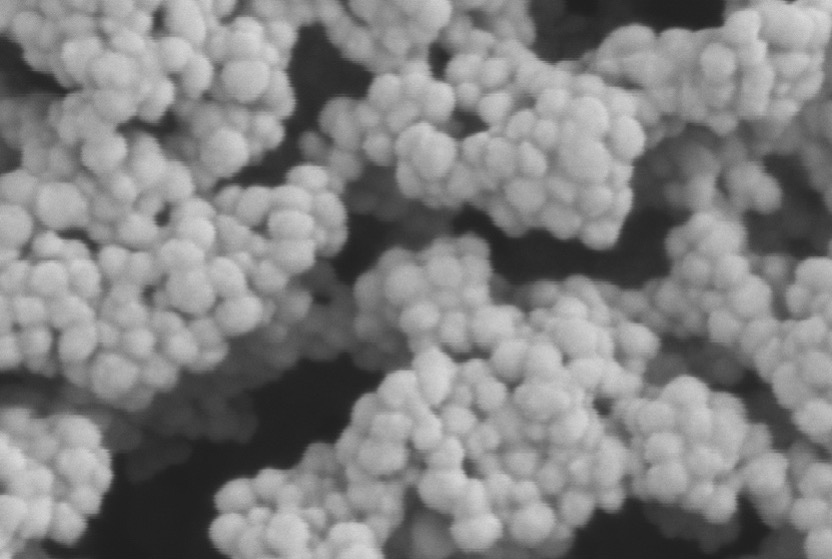
In the first stage, scanning electron microscopy (SEM) was used to assess the presence and morphology of nanoparticles within lyophilised samples. This early-stage characterisation was critical: it provided the Pearce Group with direct feedback on their sample preparation and production methods, enabling them to optimise nanoparticle yield and consistency before progressing to surface energy analysis.
Once sufficient nanoparticle production was confirmed, Resolian applied iGC-SEA to quantify dispersive and specific surface energies across a range of polymer nanoparticle variants in addition to human serum albumin (HSA). These values were then used to determine work of cohesion and adhesion to protein (albumin), providing a direct quantitative link between surface energy and the biological interactions driving protein corona formation.
Results
The Solution
Resolian’s iGC-SEA analysis provided the Pearce Group with quantitative surface energy profiles that had not previously been achievable for these materials. The data revealed how changes in polymer chemistry, particle size, and surface charge each influence surface energy, offering a direct quantitative link to the biological interactions driving protein corona formation.
The SEM stage delivered an additional benefit: imaging data informed improvements to the group’s sample preparation methods, strengthening the quality and reproducibility of subsequent analyses. Rather than simply delivering a measurement, Resolian’s involvement shaped the research programme from the outset.
What This Means
This collaboration demonstrates that iGC-SEA has meaningful applications well beyond pharmaceutical powder characterisation. By providing quantitative surface energy data for polymer nanoparticles, Resolian enabled the Pearce Group to address questions that were previously out of reach analytically.
The resulting dataset contributes new assays and reference data to the polymer nanomedicine literature, and supports a broader understanding of how surface energy can be used as a design parameter in next-generation drug delivery systems. For research teams working at the intersection of materials science and medicine, it points to what becomes possible with the right analytical partner.
Working on a complex characterisation challenge
that requires specialist analytical expertise?
Resolian partners with both industry and academic research teams to deliver precise, decision-ready surface energy data.