
LC-MS
CASE STUDY
Background
Plasma protein binding is a fundamental parameter in drug development. The unbound fraction of a drug determines its pharmacological activity, governs drug-drug interaction potential, and influences exposure-response relationships across species.
The 2024 ICH M12 guideline raised the bar for PPB evaluation, emphasising the need for robust, reproducible methods capable of supporting regulatory decision-making in DDI studies. For compounds that are highly protein-bound, with unbound fractions below 1%, that bar becomes genuinely difficult to clear.
At such low free fractions, conventional methods face compounding challenges: minimal analytical signal, assay variability, and species-dependent plasma matrix effects that can distort results if not properly controlled.
The Challenge
Quantifying extremely low unbound fractions reliably requires bioanalytical methods with exceptional sensitivity and cross-species reproducibility.
Standard approaches often fall short for several reasons: the analytical signal from the free fraction is near or below the lower limit of quantification; matrix effects differ between mouse, rat, dog, monkey, and human plasma, making a single calibration approach challenging; and sample preparation choices that work for higher concentrations can introduce systematic bias at sub-nanomolar levels.
For sponsors preparing DDI packages under ICH M12, a method that does not perform consistently across species is unlikely to meet regulatory expectations.
Our Approach
Resolian’s team developed and qualified a highly sensitive LC-MS/MS method for itraconazole as a representative highly protein-bound compound, with the goal of establishing a best-practice framework applicable to this compound class.
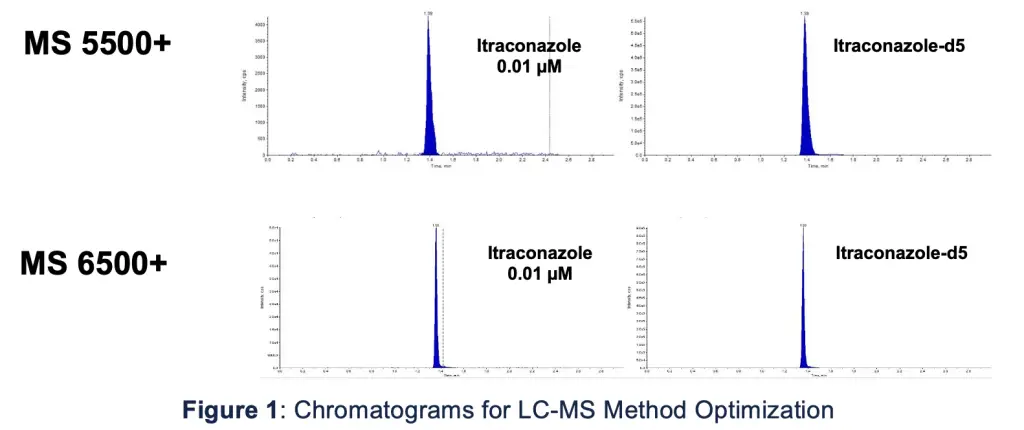
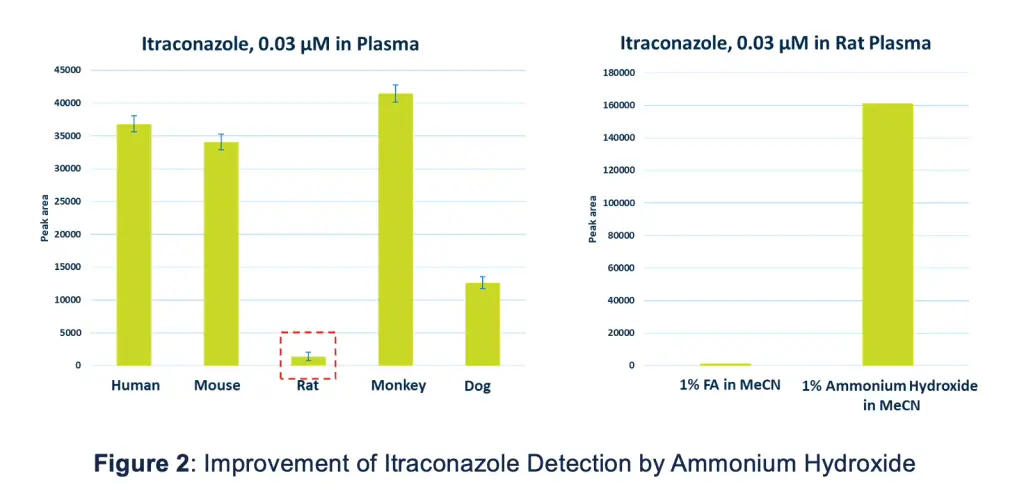
A central methodological advancement was the upgrade from a SCIEX MS 5500+ to the MS 6500+ platform, which delivered a ~10-fold increase in sensitivity. This step change in instrument capability was essential for reliable detection of unbound fractions at sub-nanomolar concentrations. Isotope-labelled internal standards were incorporated to minimise inter-species matrix effects, enabling a harmonised calibration strategy across mouse, rat, dog, monkey, and human plasma. Sample preparation was optimised by adjusting the pH of the precipitating agent, which meaningfully improved analyte recovery and reduced low-level bias in quantification.
PPB measurement used a rapid equilibrium dialysis (RED) device format with 24-hour incubation at 37 degrees C to ensure equilibrium was achieved, across five species, with triplicate samples per species and a positive control included in each run.
Is Your PPB Method Ready for ICH M12?
Resolian partners with pharma and biotech companies to deliver precise, regulatory-ready plasma protein binding data across species and compound classes.
Results
The qualified method demonstrated:
- Excellent linearity across a calibration range of 0.001 to 4 micromolar in plasma, with R-squared values above 0.999 across both calibration replicates
- QC accuracy within 4 to 11% bias and precision below 10% CV for itraconazole across all species
- Unbound fractions for itraconazole consistent with published human reference data (0.07 to 0.22%), confirming method accuracy and reliability
- Cross-species reproducibility confirmed across mouse, rat, dog, monkey, and human plasma with consistent QC performance using a single calibration approach
- The isotope-labelled IS strategy effectively mitigated matrix-dependent variability across species without requiring matrix-matched standard curves
What This Means
ICH M12 has changed what a defensible PPB package looks like. For highly protein-bound compounds, meeting that standard requires methods that have been purpose-built for this analytical challenge, not adapted from general workflows. This work provides a fit-for-purpose, validated framework that sponsors can apply to their own highly bound compounds, with confidence that the data will meet regulatory expectations for DDI-relevant in vitro studies. Resolian’s expertise across both method development and regulatory expectations enables efficient progression from early characterisation through to submission-ready data packages.
Resolian partners with pharma and biotech companies to deliver precise, regulatory-ready plasma protein binding data across species and compound classes.
Ready to Build a Defensible PPB Package?
Resolian partners with pharma and biotech companies to deliver precise, regulatory-ready plasma protein binding data across species and compound classes.